
 Member Portal
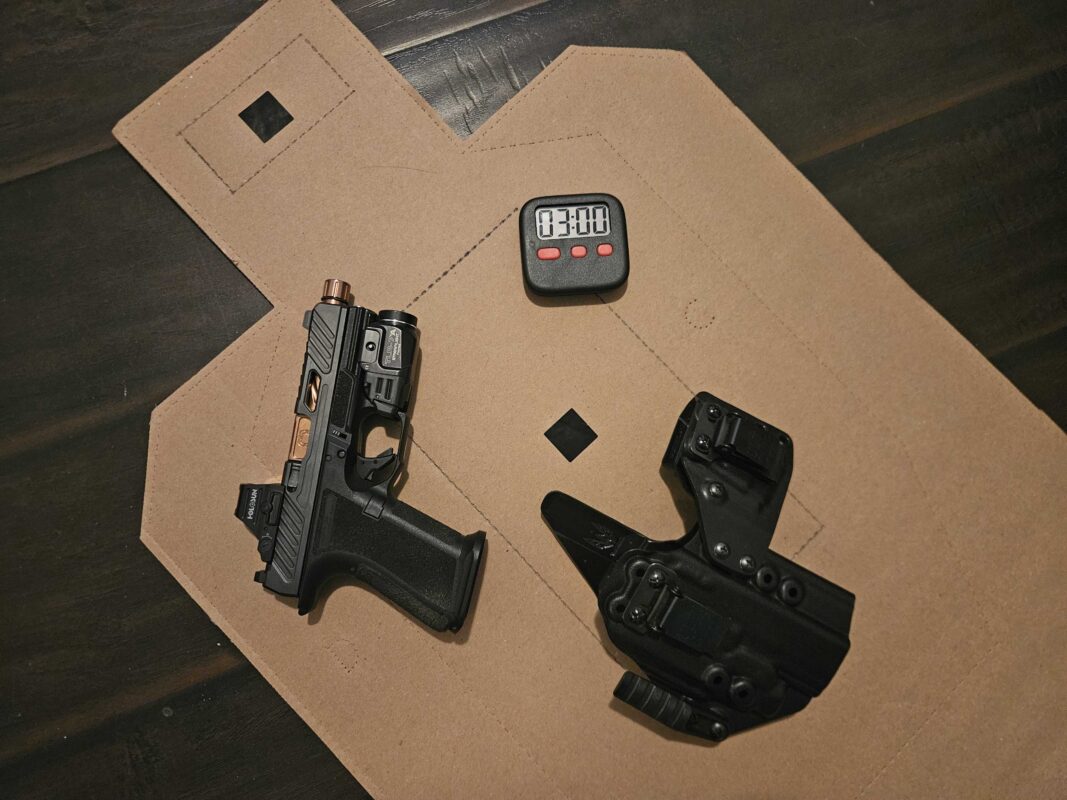
by Kayla House, Mantis
Shooting is, unfortunately, a perishable skill. It takes hard work to get to a competent level where you can hit what you want on demand, and it takes consistent upkeep to maintain that level of skill.
So how do we get to a skill level we are proud of on range and keep it? It isn’t through visiting the range as often as possible, it’s not about hours of class time on the weekends or your once a month chapter meeting. The range is where we test our skills, classes and meetings give us a way to learn what we need to do to get to the next level. Instead, you build those solid foundational skills in dry fire, a few minutes at a time as part of each day.
Consistency is key to having solid firearms skills. Doing a shorter amount of practice more often is going to yield bigger results than trying to brute force progress for an hour a few times a month.
Let’s take a look at how you can build consistency into your day with making dry fire a daily action and breaking down barriers to completing it.
Just Minutes a Day
Competence and improvement really is as simple as just a few minutes a day. Handling your firearm often breeds familiarity and confidence, it ensures that each time you pick up the gun it feels like an extension of yourself rather than a foreign object. You don’t need to learn from the start each time, you simply pick up where you left off.
We all have a few minutes in our day somewhere we can dry fire briefly, unfortunately that time often eludes us in our busy lives. Much like the gym, dry fire falls through our schedule, being put off and put off for other “more important” or “more pressing” things even though we know we should do it. Unlike the gym though dry fire can be a quick activity done right on the spot. Let’s take advantage of that.
Somewhere in your day there is some dead time, a moment you can pause for 1-3 minutes and do some dry fire. By committing to such a short, finite amount of time we can relieve the pressure and lower the mental load. This makes the action of dry fire a much easier hurdle for us to clear in the day.
Dead time happens when we are typically forced to wait for something or are in a transitional time between two larger actions.
You may have dead time while waiting for coffee to brew, letting the dog out, or kids getting ready to leave the house. It could be while your computer is booting up or waiting for the water in the shower to get hot.
Perhaps finding dead time when you transition from one activity to another works better for you. Maybe it’s after you’ve gotten ready for the morning but before you leave your room to start the day, or like Mister Rogers, as you get home and move yourself out of your work persona and into your leisure one. It could be part of your warm up or cool down routine with the gym, or maybe you do it before walking the dog or when you get in.
You get the idea, we all have some point in the day where 1-3 minutes of dry fire can be tucked into without much disturbance of the overall day. Get a small timer or use your phone and know that this is a short, finite commitment that will pay dividends.
Habit Stacking
You may have identified some different options of dead time but getting yourself to actually do it is another hurdle to clear. The easiest way to do this is to habit stack. The opportune dead times to dry fire during are those that are already a habit, something you do every day without fail automatically. A habit that happens at a predictable time in our day and isn’t one of the things that gets cut if you are in a rush.
Habit stacking simply creates a cue or trigger for you to remember to dry fire. It also creates the space in the day for the activity. If you want to be an over achiever, pick something you do twice a day like brushing your teeth or changing your clothes. It’s a simple when I do ‘this’ then I do ‘that’ cue.
Breaking Down Barriers
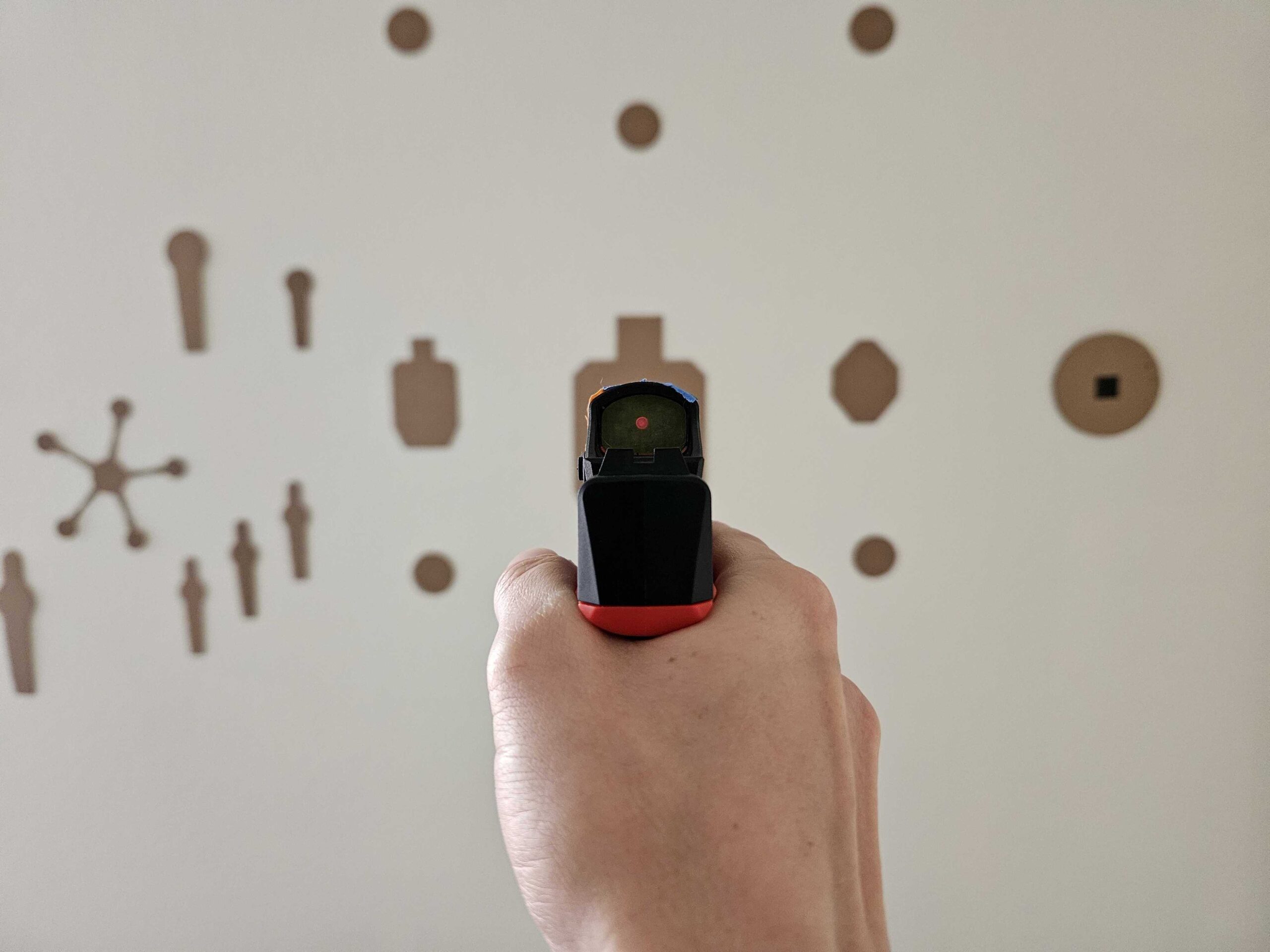
This sounds easy but when you think about having to retrieve your gun from the safe, clearing it, setting up targets, and ensuring you’re in a safe dry fire dojo you immediately think this takes way more than 3 minutes just to set up. We hear you and we have a solution.
Save the use of your real gun and setting up targets for dedicated dry fire sessions, those that start reaching the 5-15 minute range. Which when done a couple times a week will help you make significant strides. But what we are talking about here with 1-3 minutes is all about sharpening the axe.
Those 1-3 minutes a day ensures you are keeping up with your skills and ready for use of your concealed gun. They ensure you get some hands-on time even if you miss your longer dry fire sessions, chapter meeting, or range time that week or month.
Break down the barriers to consistent practice by making it convenient. You found the time, you’ve given yourself a cue, so the next step is to take the complicated part of the gun out of the equation. Get an inert laser training pistol, like TitanX, and use per-existing items in your environment for targets if you don’t have them up around the house already.
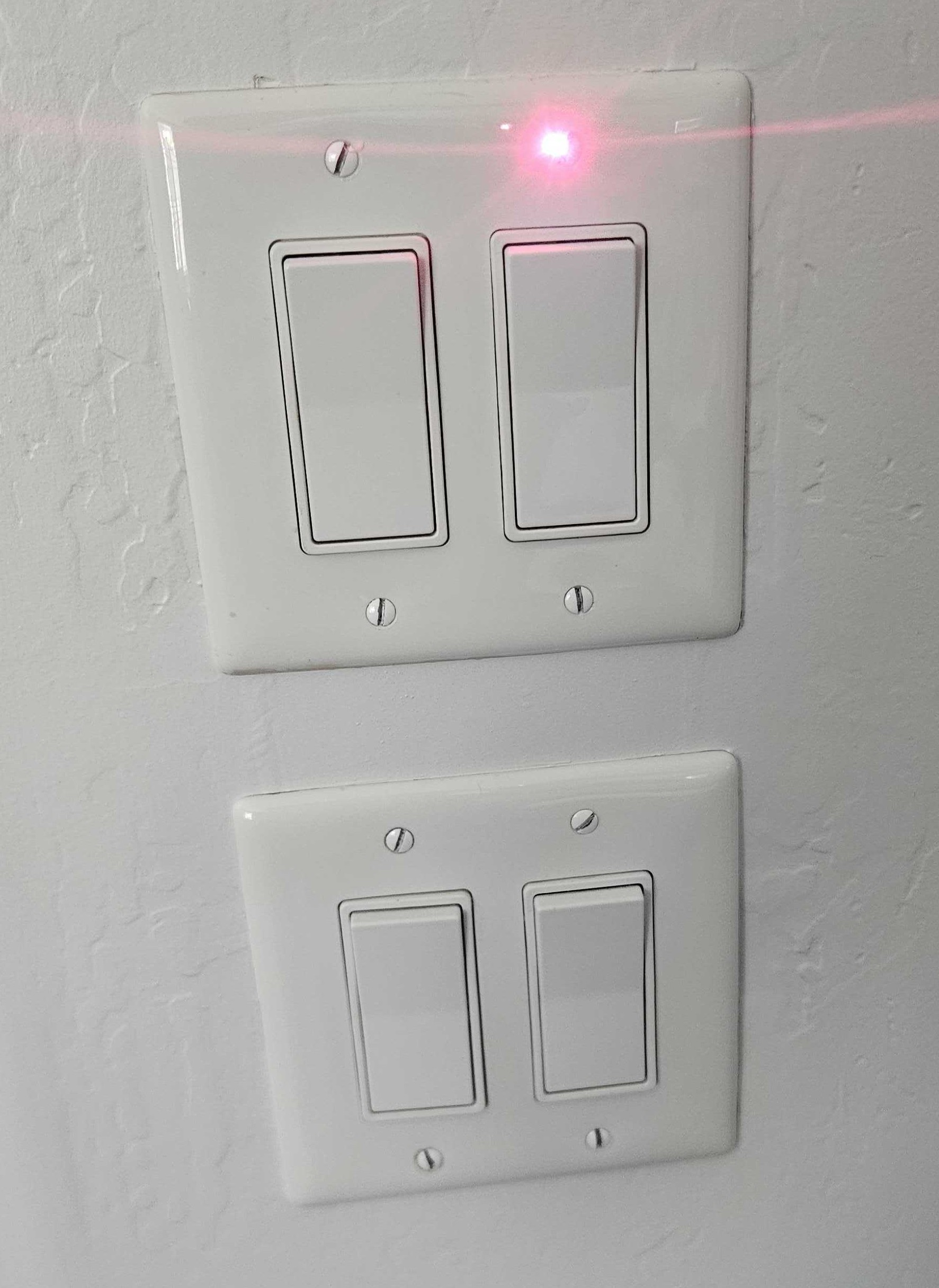 We’re getting old school now. Prior to dedicated dry fire training products shooters simply used light switches and knick-knacks for targets. Pick the light switch across the room and aim at that. Challenge yourself by first going for hitting the entire faceplate, then move to just the switch itself, and when you can hit that aim for the screw. When the screw becomes too easy, start transitioning from one screw to the other.
The inert laser pistol can sit out on a table or be at the ready in a drawer since no ammo can ever be used in it. The lightswitch is just there, all the time. You’ve now reduced your barrier to just picking up the gun.
Be aware of where the laser impacts on each trigger press and what your sights are doing when the shot goes off. Noticing that feedback from the laser pistol and then correcting your technique on the next shot creates the necessary feedback loop to make that 1-3 minute daily action build to strides of improvement.
Of course with TitanX you can connect it to the app for logging and feedback if you’d like, and review it quickly or even review it later in some different period of dead time.
What to Dry Fire
Picking fundamental skills for the quick daily dry fire will be best at keeping you sharp. Your fundamentals should always be on point, good stance, grip and sight picture. Then apply that to trigger control only practice where you simply press the trigger straight back without disturbing the sights.
If you are fairly confident in your trigger control add that to a primary skill like pressing out onto target or transitioning between targets.
For pressing out, simply start at the compressed ready step of your holster draw where your hands are joining together. From there extend out, acquire your sight picture and press the trigger. Reset and repeat for the duration of your dry fire.
To practice transitions, pick two items that are set apart from each other, take a shot on your first target, move your eyes to the second target, let the gun follow and take the second shot.
Practice transitions in various ways. Vary the lateral distance between the targets and if possible the depth too such as the wall of your room then a further wall like into the bathroom or closet. Transition in both directions, left to right, right to left, near to far and far to near. Mix it up and you cover a lot of scenarios.
That’s it super simple daily dry fire in just a few minutes. Do this each day and you get 7 to 21 minutes of practice each week. More than enough to keep up your skills.
A Real Life Example
How do I know this works? It’s exactly what I have been doing for over a decade now. When I first started shooting my skills were adequate enough to hit the silhouette but they went up and down over time with how often I actually went to the range. Lots of motivation and then life happens and those range trips would wane.
When I decided to get serious and build some solid skill I started out with classes, then added in long dry fire sessions once or twice a week. It was unsustainable. I got the idea from the fitness industry to use what’s known as grease the groove, a few opportune reps that happened frequently.
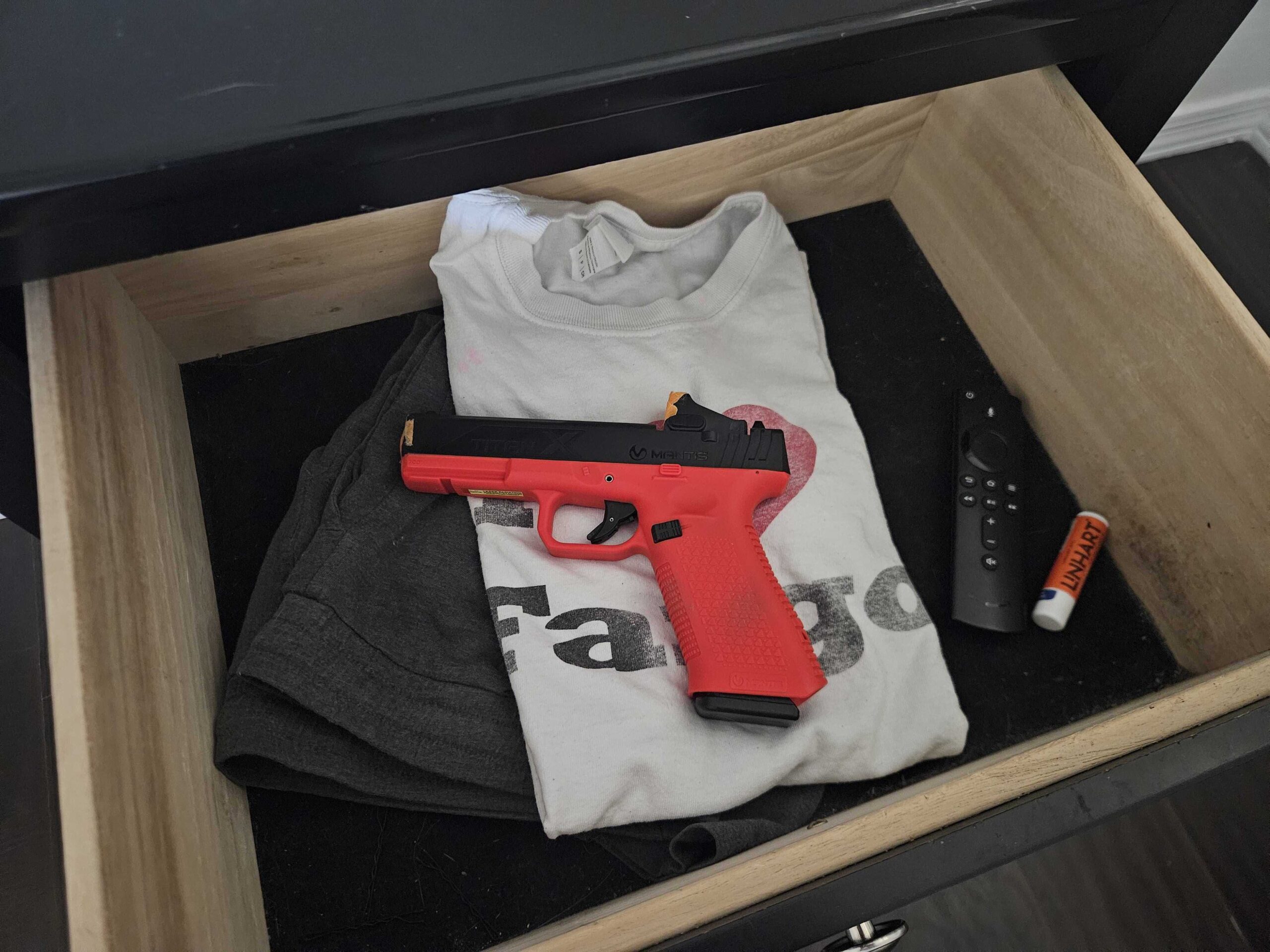
This came to fruition through picking an action that happened twice a day and a SIRT laser pistol. My chosen activity, changing from pajamas to day clothes and back again. I would set myself up for success by putting the SIRT pistol on top of my clothes. I had to pick up the gun to get to my clothing which forced the laser pistol into my hand twice a day. If it was already in my hand I felt guilty not shooting at least a little.
One minute turned to two and two to three because I enjoyed these little dry fire snacks. I was seeing improvement and feeling confident with the gun. My skills progressed dramatically over just a couple months. This small daily action created the momentum for my skills to grow and so did my enjoyment at the range.
We like to do things we are good at, and when people ask me how I became a good shot I tell them through dry fire for just a few minutes every day. You can grow your skills too, head over to mantisx.com and if you’re an AWA member, be sure to log in, visit Member Resources and use your 20% discount!
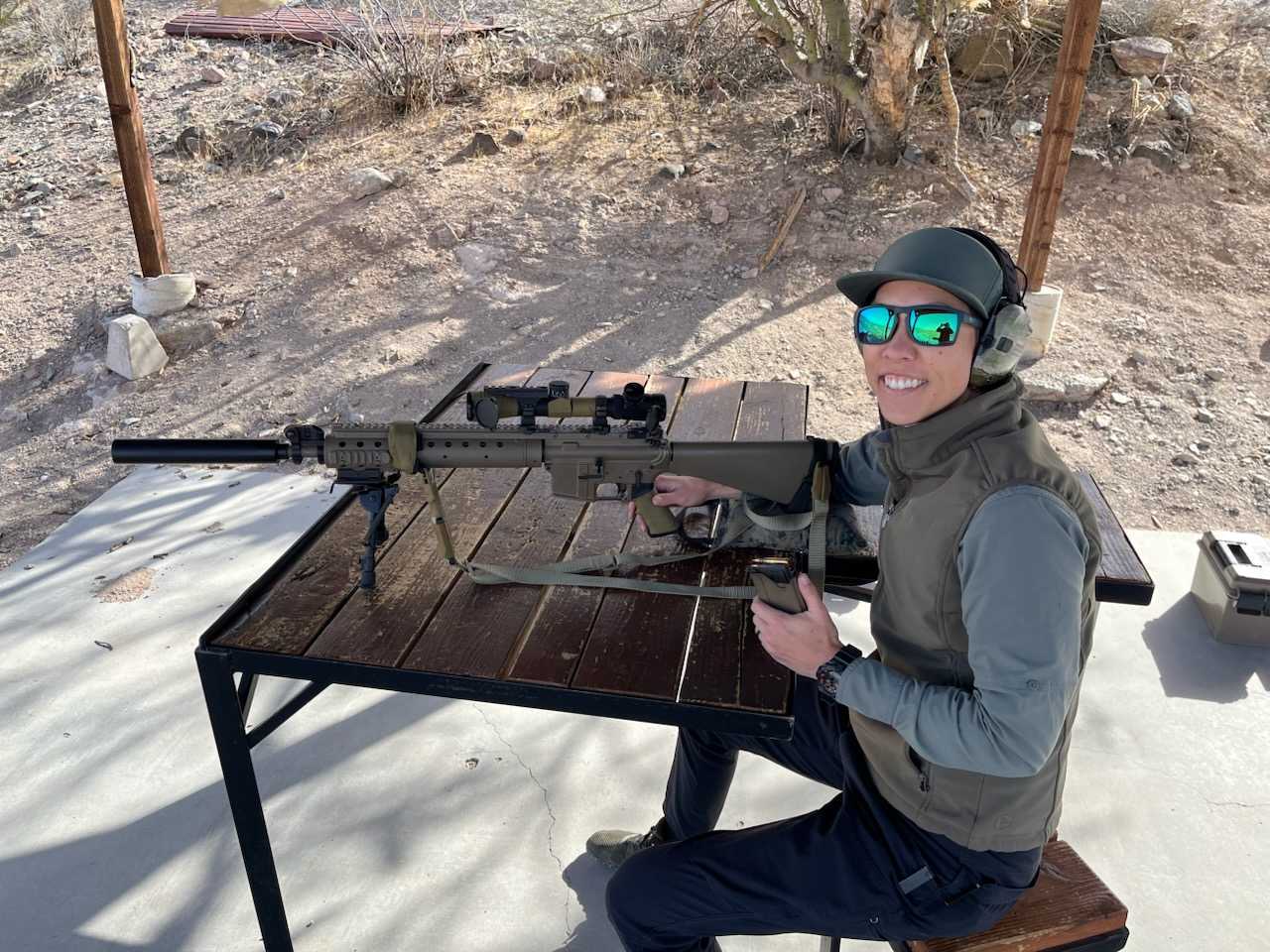
About the Author
Kayla House has a passion for personal protection and education making firearms instruction a natural fit. As a lifelong learner, Kayla believes that there is always more knowledge to gain and that everyone can teach you something. Firearms is a never-ending journey, and Kayla enjoys helping ladies progress along theirs no matter where they are in it. As much as she enjoys the teaching aspect, Kayla knows it is important to continue to be a student as well. Kayla has taken classes and clinics in pistol, rifle, and shotgun with both sporting and defensive focuses. She additionally has training in active shooter response, first aid/trauma field medicine, krav maga, edged, hand, and improvised weapons. Kayla is a leader of two chapters in Arizona, lead instructor at Orden Training House, and Product Manager at Mantis Tech.
 Special thanks to AWA’s .50 cal Sponsor, MantisX
